



I was recently chatting with a friend (who, to be fair, doesn’t travel nearly as often as I do), who was planning a trip to Europe for her family. “We’re flying United there and back,” she said, “which is a bummer, but we’re hoping that we’ll be able to upgrade to first class.”
United, of course, does not offer an international first class product—its Polaris cabin is business class (and overrated, though that’s a topic for another article). I didn’t correct her, however; there was no point.
Instead, I put on my schedule to write this article, where I’ll not only help you understand what first class is (and isn’t), but will also address a more fundamental question: Is first class worth it?
Defining “First Class”
To put a finer point on my main thesis from the intro, no US airline offers a true first class, neither domestically nor internationally. This is particularly important to note if you’re booking a flight on American Airlines, who “first class” product on its internationally-configured 777-300ER aircraft is a decade old at this point. The seat itself is comparable to a typical business class by today’s standards; the service is…well, not first class. “Delta One” in spite of its name, is not first class.
Beyond the debate about domestic first class vs international first class, to be sure, service more than seat is what differentiates F from J. When flying transoceanic in first class, you’ll typically be served some of the top champagne in the world, as well as caviar, a soup course and a hand-tossed salad—none of these things are present in most business class cabins. You’ll also typically have a dedicated flight attendant (or multiple ones), a turn-down service and more.

What to Know About Flying First Class
Domestic US first class is international premium economy
I hate to be a broken record, but it’s important that you understand the truth: A “first class” ticket within the US only gets you a slightly bigger seat, and a meal that’s probably worse than average school cafeteria food. There are some exceptions to this rule—widebody flights to and from Hawaii; premium transcontinental routes between JFK and LAX/SFO—but as a general rule, domestic first class isn’t great.
(Europe’s is worse)
It is, however, better than European first class—which, to its credit, is usually marketed as business class, or simply “Euro Business.” With even fewer exceptions than in the US, European business class is several steps below real business class. You’ll sit near the front of the plane in a normal economy seat; the only difference is catering and the fact that the middle seat is blocked. This is fine if it comes “for free” with a long haul ticket, though I’d never pay for it.
International first class is incredible
Now, I might be biased, given that the internet first class flights I’ve taken in the past year (on Japan’s ANA and JAL) are known as some of the best in the world. But whether I was sipping Krug, eating fine wa-gyu or sleeping soundly in a suite that was as big as some Tokyo hotel rooms, I was quite literally living the high life. Other fabulous first classes around the world include Singapore Airlines Suites and Air France La Première.
(But often unattainably expensive)
Can’t book first class with frequent flyer miles? Well, you’d better be prepared to pony up a lot of cash. First class fares can easily cost you north of $10,000 round-trip transatlantic, and can be double that over the Pacific. Even if you’re booking with miles, there’s still a potential for sticker shock if you go about it the wrong way. For US travelers, this includes attempting to book transpacific business class with United, which charges an eye-watering 220,000 miles one-way as of late 2025.
Only a few first class cabins are truly worth the hype
Earlier, I mentioned not only Japan’s two airlines, but the flag carriers of France and Singapore, when discussing amazing international first class cabins. Unfortunately, most other first class products in the world range from forgettable (Cathay Pacific’s existing product; British Airways) to downright bad (Air India; Lufthansa’s non-Allegris seats). If you’re going to splurge on first class, make sure you’re getting your money’s (or points’) worth!
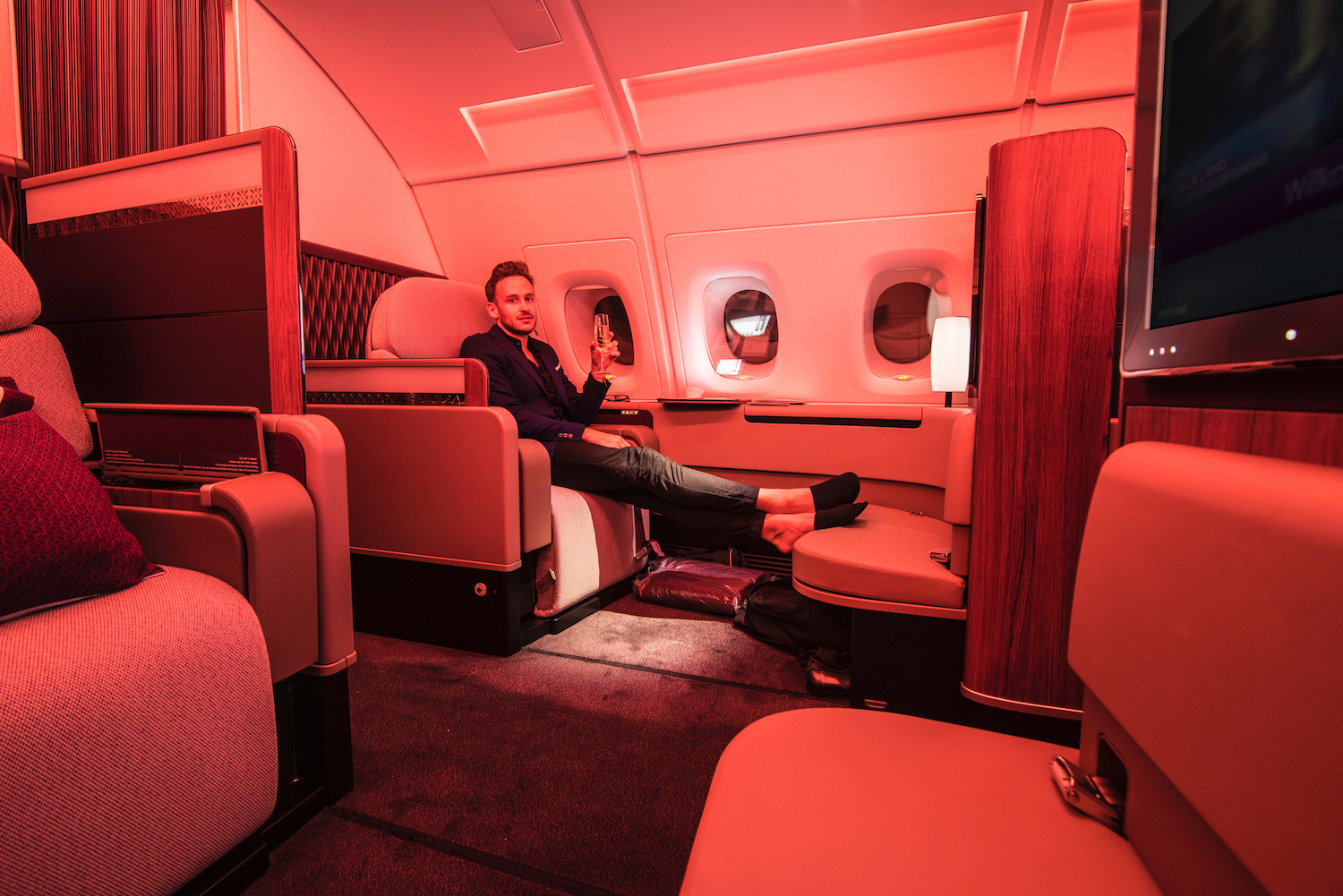
First Class vs. Business Class
To pick up on the discussion we were having a few paragraphs ago, I thought it could be helpful to more intentionally delineate first class from business class:
- Seat: In first class, an individual suite with a door and aisle access is a given; in business class, it’s common, but even where it exists will typically be both narrower and shorter than its first class counterpart.
- Service: Passengers flying first will typically have at least one flight attendant completely dedicated them. This person will check on them throughout the flight, perform turndown service when the time is right and remain more or less on call. In business class, you will be one of anywhere from 4-8 passengers under the care of one cabin attendant.
- Food and drink: In addition to top-shelf liquor, fine champagne and a sommelier-curate wine list, first class passengers enjoy multi-course dining that spotlights restaurant quality food. Business class passengers can sip bubbles and eat on real plates, but the menu is comparably modest.
- Pricing and availability: When paying outright, first class typically costs at least double what you pay for business class, which is itself often several times more expensive than coach. The difference can be less dramatic when using miles and points, but availability will also be significantly harder to find.

Other FAQ About Flying First Class
Is it worth paying extra for first class?
I would definitely pay a few hundred dollars extra (or a few tens of thousands of points extra) to fly “real” first class on a long haul flight on a widebody aircraft. Generally speaking, however, I will not pay to upgrade to domestic US first class (which is really Premium Economy, by international standards) unless the cost is minimal.
What are the disadvantages of flying first class?
The main disadvantage of flying first class is the cost—which, if you aren’t wealthy or haven’t budgeted for it, can decrease the amount of money you have to spend during your actual trip. If money is no object, however, then there is no major disadvantage to flying first, apart from the fact that it will make it difficult to go back to economy class.
How rich do you have to be to afford first class?
You don’t need to be “rich” to afford first class at all! People with normal income levels can fly first class by scoring deals when booking outright, by booking using miles and points or simply by budgeting smartly to maximize disposable income. Whether you can “afford” first class is a question of more than simply your salary on paper.
The Bottom Line
Is first class worth it? It might be, depending on the circumstances. To start with, you need to understand what first class is (and isn’t). Namely, that domestic first class within the US is closer to premium economy by global standards; only a few airlines offer “true” intercontinental first class, with most instead maxing out at business class, which they either market deceptively or passengers simply misidentify. If an opportunity to fly actual first class presents itself, you need to decide whether the price (ideally in miles and points, rather than cash) is worth it, and set realistic expectations about what to expect onboard. Alternatively, you can hire me as your Travel Coach, and let me make the determination for you.