


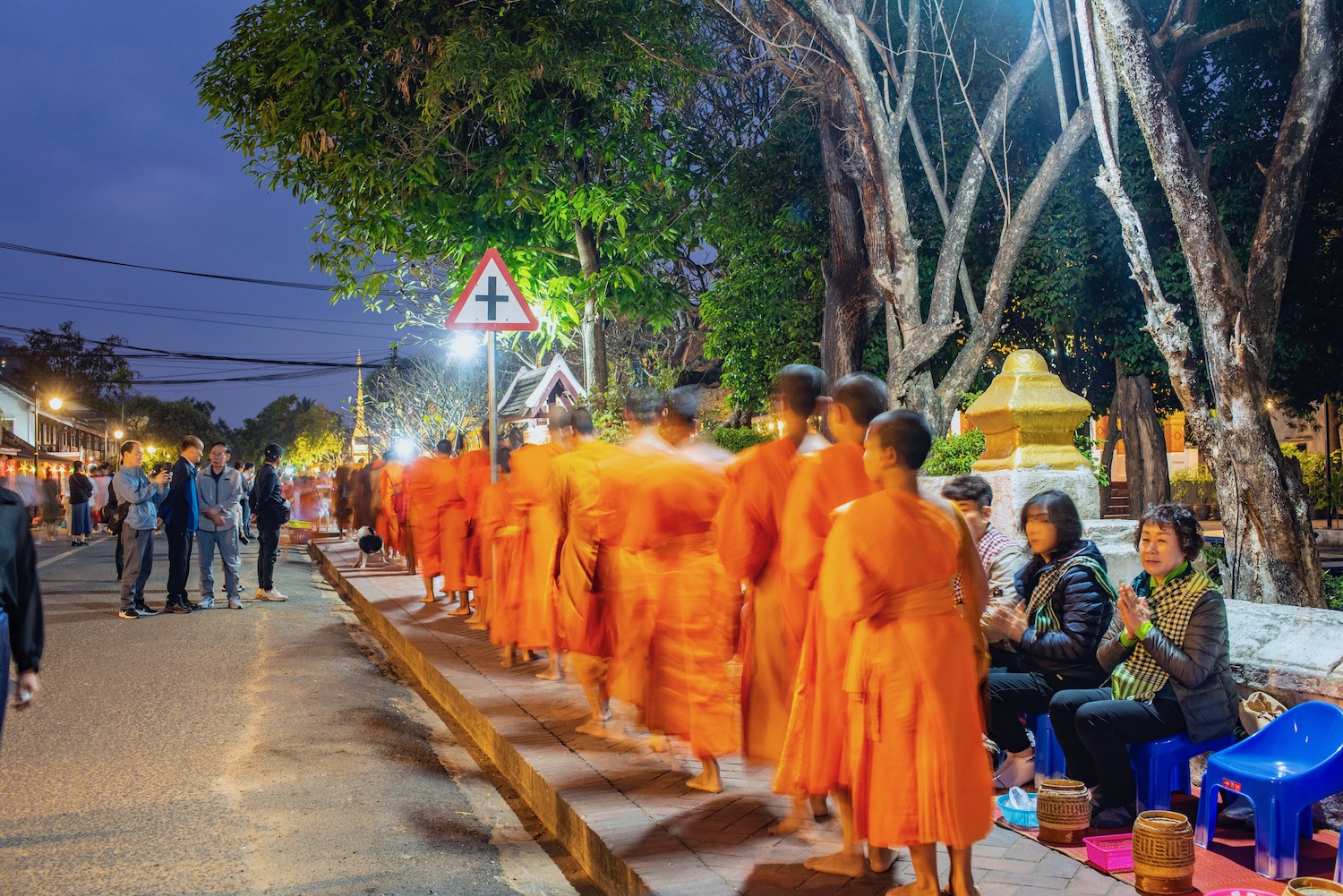
Southeast Asia, as you’ll know if you’ve read this site for any length of time, is probably my favorite single region in the world. It’s a place I visit several times every year, and have even lived on more than one occasion.
Of course, as much as I love Southeast Asia, it’s not a foolproof destination—and it isn’t just one destination. Your experience can vary drastically depending upon not only which countries you plan to visit, but during which month you take your trip.
This latter bit—in other words, the best time to visit Southeast Asia—is what I’ll be writing about today. I hope you’ll continue reading!
With Southeast Asia, Timing is Everything
In February of 2014, I was on the last of several flights that would take me to Jakarta, when a European tourist seated next to me dropped a truth bomb. “Visiting Indonesia during the rainy season,” he remarked, though I wasn’t sure initially if he meant it as a statement or a question. “Bold move.” Prior to this point I’d assumed that the best time for Southeast Asia, across the board, was the northern hemisphere winter. Frankly, I was too embarrassed to question him.
Unfortunately for me, he’d been right: The month I would go on to spend in Indonesia would be cloudy and rainy, with only occasional sun and blue skies. Back then, of course, I wasn’t nearly as preoccupied with weather as I am now; it didn’t derail my trip as it might do if I took a similar one today. Still, it taught me a valuable lesson: Different parts of Southeast Asia are at their best at different times of year.
Factors That Can Make or Break Your Southeast Asia Trip
Precipitation
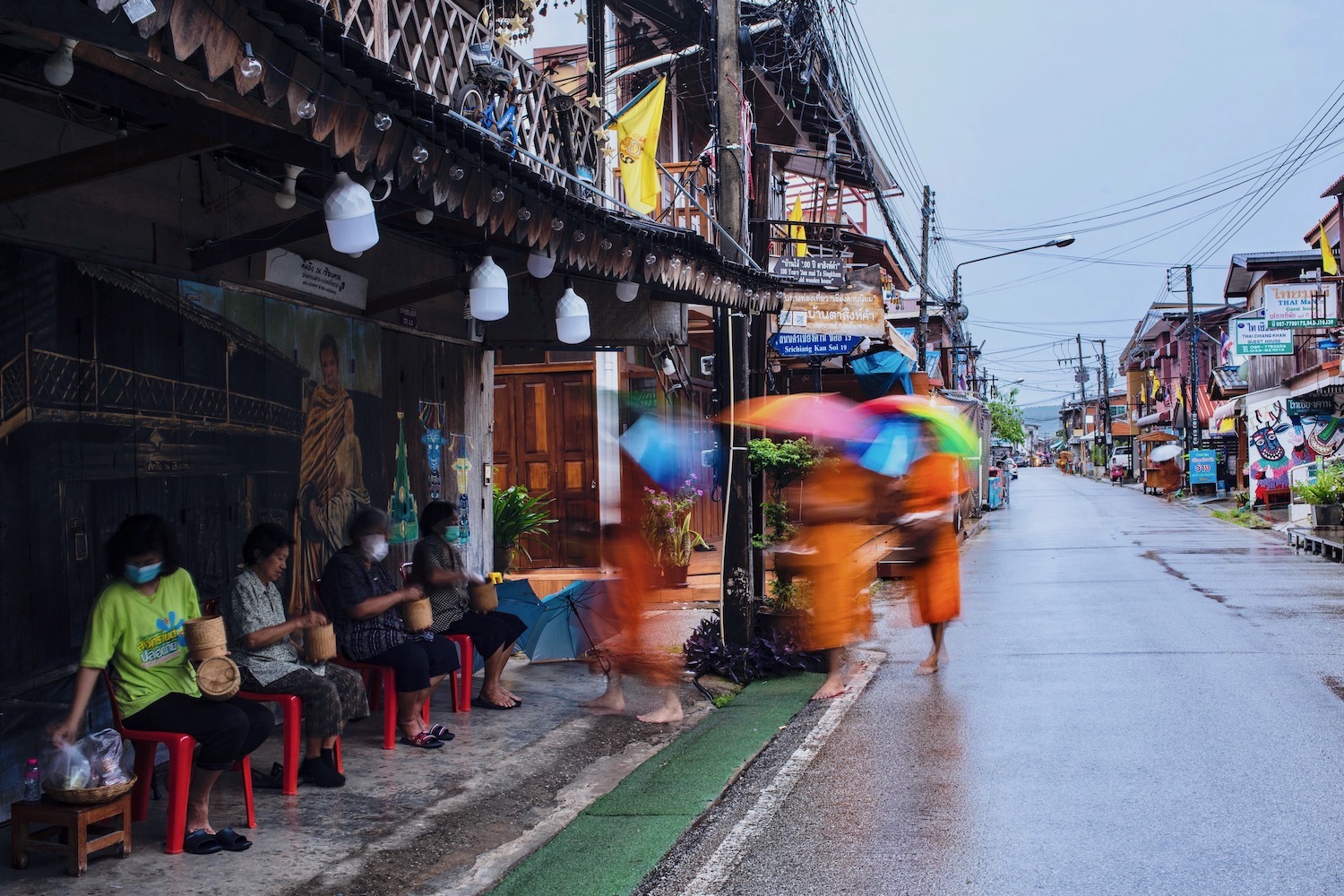
This is the most important thing to consider, especially if you’ll be hitting the beach. For most of Southeast Asia (Myanmar, Thailand, Cambodia, Laos, Vietnam, Singapore, The Philippines and peninsular Malaysia), the dry season runs from about November until April. However, for most of Indonesia (including the island of Borneo, which it shares with Malaysia and Brunei), the dry months are those between April and October.
Temperature

Planning on hitting the best golf courses in Bangkok during your trip? For you, the calculation for the best weather in Southeast Asia won’t just include precipitation, but temperature. As a general rule, the cool season in a given country occurs during the first two or three months of the dry season. So in most of Thailand, for example, temperatures are at their coolest from late November until mid-February; in Indonesia, you’ll want to target May or June.
Pollution
Unfortunately for travelers to Bangkok in particular, the driest months tend to be the smoggiest ones, with no rain to clear the air of pollutants. This is also present in other Southeast Asian nations, but is most present in northern and central Thailand, where smoke from farmers burning their crops mixes with auto emissions. In most of Southeast Asia, smog season starts in February and lasts until rains begin falling in May.
Holidays
One potential advantage of choosing the Southeast Asia rainy season? This will ensure you miss the Christmas and New Year holidays, which see thousands of foreign travelers from Europe and Australia especially visit the region en masse. Chinese New Year is also an extremely busy time, though dates vary depending upon the year. The impact of local holidays in a given country, meanwhile, tends to be more limited.
Festivals

In most cases, travelers are not going to time their trips to align with festivals, though there are exceptions to this rule. The most famous is probably Songkran, a water festival that marks the Thai New Year, and takes place in April of every year. In other cases, participation in festivals may be more incidental, such as if you’re visiting Malaysia in March, and happen upon a celebration of the Holi festival, which takes place in the country due to its large Tamil Indian population.
Two Simple Rules of Thumb for Visiting Southeast Asia
If your primary goal in planning a Southeast Asia trip is to reduce complications, visit in March. This is the end of the cool, dry season in countries like Thailand, Vietnam and peninsular Malaysia, and the beginning of the cool dry season in Borneo and most of Indonesia. While it’s possible that the former countries will have started to get hot (and may still have lingering pollution) and the latter ones may still be rainy, your likelihood of a successful trip is high.
On the other hand, if your main goal is to reduce disappointment, I’d suggest prioritizing 2-3 of the above five factors and zeroing in on those. Let’s say, for example, that you want to visit Thailand when it’s cool and dry, but when there isn’t much pollution. For most of the country, this would mean a trip in November or December—after the rain has stopped, but before “smog season” begins.
Other FAQ About the Best Time to Visit Southeast Asia
What are the best months to go to Southeast Asia?
For most of Southeast Asia (i.e. Myanmar, Thailand, Cambodia, Laos, Vietnam, the Philippines, Singapore and peninsular Malaysia), December to March is the best time to visit, i.e. the cool and dry season. This is flipped for Borneo and most of Indonesia, however, with May to October being the optimal window to visit.
When is the rainy season in Southeast Asia?
The rainy season in Southeast Asia varies, depending upon where you plan to travel. While rain falls in countries like Thailand and Vietnam from about April to October, these are the dry months in Indonesia and on the island of Borneo, who see their monsoons take place between November and March.
When not to visit Southeast Asia?
If you want to have a sunny trip to Southeast Asia, make sure to avoid the rainy season in whichever countries you plan to visit. This is between about April and October for most of Southeast Asia, though you should note that in most of Indonesia (and Brunei/Malaysian Borneo), the rainy season occurs from November to March.
The Bottom Line
The bad news? There isn’t just one best time to visit Southeast Asia. It varies depending on which countries you plan to visit, as well as what sort of experience you’re seeking. The good news? If you’re clear about both these things, and at least somewhat flexible about when you travel, you can ensure that the trip you take will match the one you’ve been dreaming about. As someone who’s spent years of my life in Southeast Asia, from Saigon to Singapore and from Mandalay to Manila, you can trust my advice on this front. Want to leverage my travel experience in a more deliberate way? Consider hiring me as your Travel Coach!