



I’m too young to have experienced the so-called “Golden Age of Aviation” for myself, though stories about it are one of my core childhood memories. My dad flew up to five days per week for work in the 80s and 90s, back when fares were high, seats were soft and “security” meant walking through a metal detector.
On paper, the experience of flying US airlines seems a lot better than it would’ve been then. A far larger percentage of Americans can now afford to travel by air; most airplanes are new, and feature industry-leading tech and comfortable cabins; you can fly virtually anywhere in the world nonstop from major hubs like Dallas, Atlanta, New York-JFK and LAX.
The underlying reality, of course, belies all the truths: When comparing American vs Delta vs United, it’s not a question of which is best—it’s simply which will make you hate your life less when the aircraft door closes.
Why I Avoid US Airlines Whenever Possible
American or Delta or United—for me, it doesn’t really mater. The simple fact is that if I have a choice to fly a non-US airline, I will. When flying overseas, I only choose a US airline if I literally can’t find availability on a superior foreign carrier, or if I’m using the flight benefit of people I know who work for airlines. Domestically, of course, this is much more challenging. Under current law, foreign airlines are not able to operate flights within the US.
As I’ll outline over the next few paragraphs, US airlines seem to be in a race to the bottom. In recent years, US flight attendants have been lionize for their role in passenger safety, and mostly absolved of their duties in the service and hospitality realms. This has resulted in attitudes that range from disinterest to contempt to hostility, to say nothing of all the operational issues that plague American carriers, even though virtually every other country’s airlines seems to avoid them.
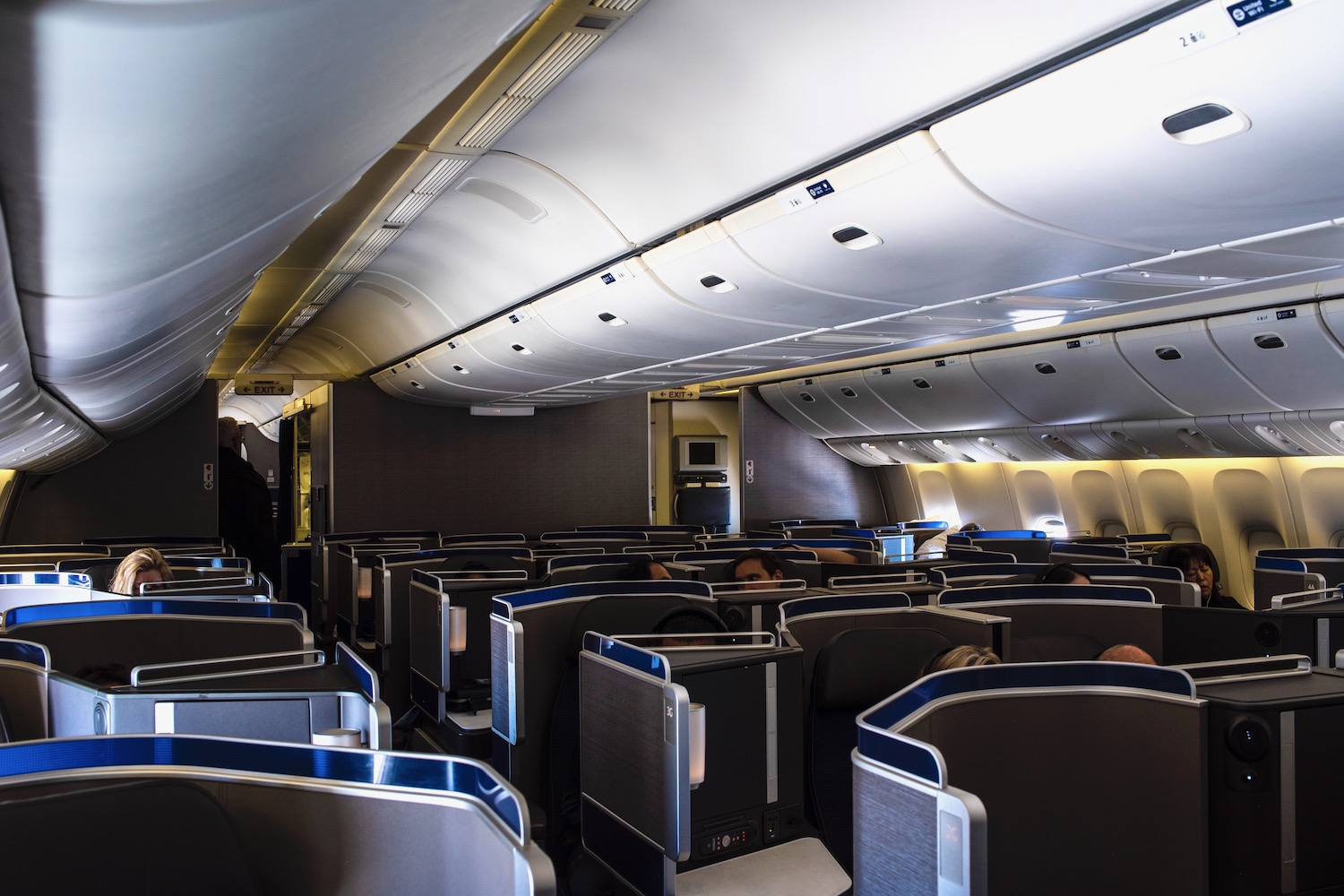




Ways to Compare American, Delta and United
Destinations
United puts American and Delta to shame when it comes to its Pacific network, which is of most interest to me, given the places I plan to travel. Delta, meanwhile, is slightly superior over the Atlantic, though United has a similar number of destinations in Europe, Africa and the Middle East. American has the most impressive domestic network; it’s also by far the largest carrier between the US and Latin America. I’d say that overall, United’s route map is the most impressive, even if some of its “dots” (such as Bangkok and Ulanbaatar, which it only serves from waypoints in Asia) are misleading.
Fleet
Comparing American and Delta and United on this front, I have a few observations. First, when it comes to long haul, United and American are exclusively Boeing airlines, putting most their cards on the 787 Dreamliner table, with each having respectable fleets of 777-300ER and 777-200ER planes, which will admittedly be phased out at some point. Delta, meanwhile, focuses on the Airbus A350 and Airbus A330-900, though it has a notorious fleet of older 767s and legacy A330s, which are among the most maligned planes for the “premium” travelers it claims to target.
Cabin crew
Frankly, flight attendants on all three of these airlines are some of the worst in the world on the whole, even if I’ve of course had pleasant interactions with countless individual crew on each of them. I’d say that Delta’s flight attendants probably try the hardest in terms of grooming and attitude; United’s crews seem to prioritize efficiency (which I appreciate), though that often comes at the expense of hospitality. American’s crews, meawhile, are a ghastly mix of hostility and incompetence. In all cases, seniority systems harm the service experience, prioritizing years on the job over all else.
Alliance
When I think of Delta vs American vs United, I often think of it as SkyTeam vs oneworld vs Star Alliance, since I only usually fly these airlines in order to connect to one of their superior alliance partners. In general, I’d say that United’s membership in Star Alliance (the world’s best alliance) gives it the biggest boost, while Delta suffers from its membership in the long-struggling SkyTeam. For American, I actually love several oneworld alliance carriers, though the only partnership that truly helps the airline is its one with JAL.
Hubs
Each of these airlines’ hubs serves different purposes, which relate to its core business strengths. United’s Pacific network, for example, depends as much on SFO‘s connections as its does on O&D from LAX. American’s massive domestic operation, meanwhile, requires the sheer scale of fortress hubs like DFW and CLT; it couldn’t be as strong as it is in Latin America without MIA, the de-facto gateway to that region. Delta, meanwhile, is buttressed over the Atlantic by its dominant position at JFK; its failure to transform Seattle into a transpacific gateway on the level of SFO is why it’s such a distant second to United over that ocean.




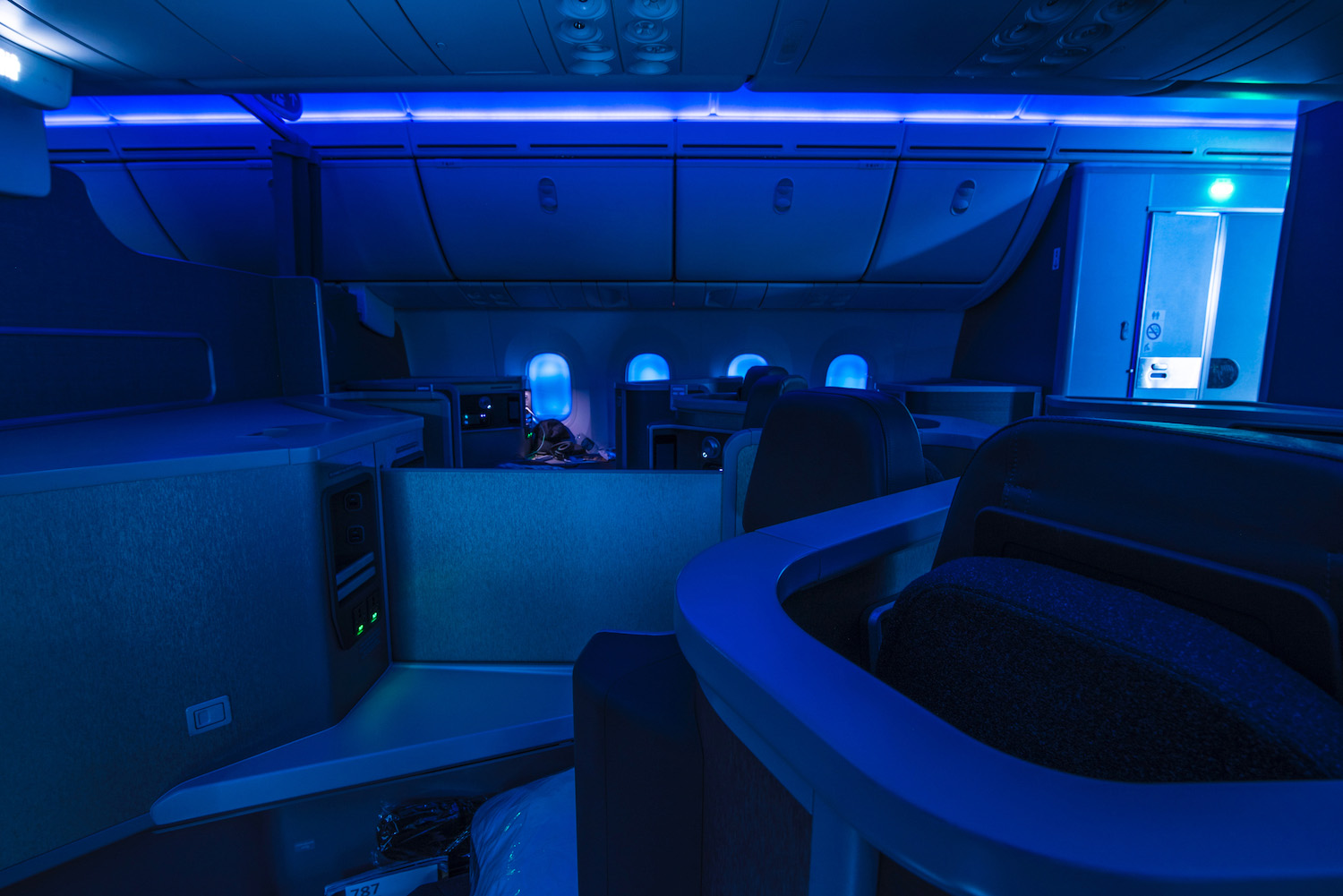
Are Any US Airlines Decent?
For some reason, Delta often avoids getting lumped in with American and United on being one of the bad “Big 3” US airlines, though I’ve never really fallen for it. While it’s true that Delta’s marketing is slick, it’s only effective if you look at it—the experience onboard most Delta flights belies the promise its advertising makes. Of course, the US is home to more than three airlines, even if a cascade of collapses and consolidation has made this seem like the inevitable endpoint.
- No matter what you do on your trip, you’ll want to be connected at all times, whether to post pictures to social media, make restaurant reservations or simply to compare US airlines.
- I can personally recommend Ubigi, which offers fast connection speeds, competitive rates and one-touch installation you can complete before you ever land in your destination.
- Even better? When you use my exclusive link to purchase a travel eSIM from Ubigi, I get a small commission. Please and thank you!
Beyond the choice of Delta or American or United, the second tier of US airlines includes Southwest (which was recently acquired by a private equity firm, and is certainly being run like one), JetBlue (which is slowly bleeding out financially) and Alaska (which is expanding rapidly—maybe to the point of unsustainability. Each of these airlines is objectively better than the three this post focuses on, though they have much more limited networks and thus, limited usefulness.
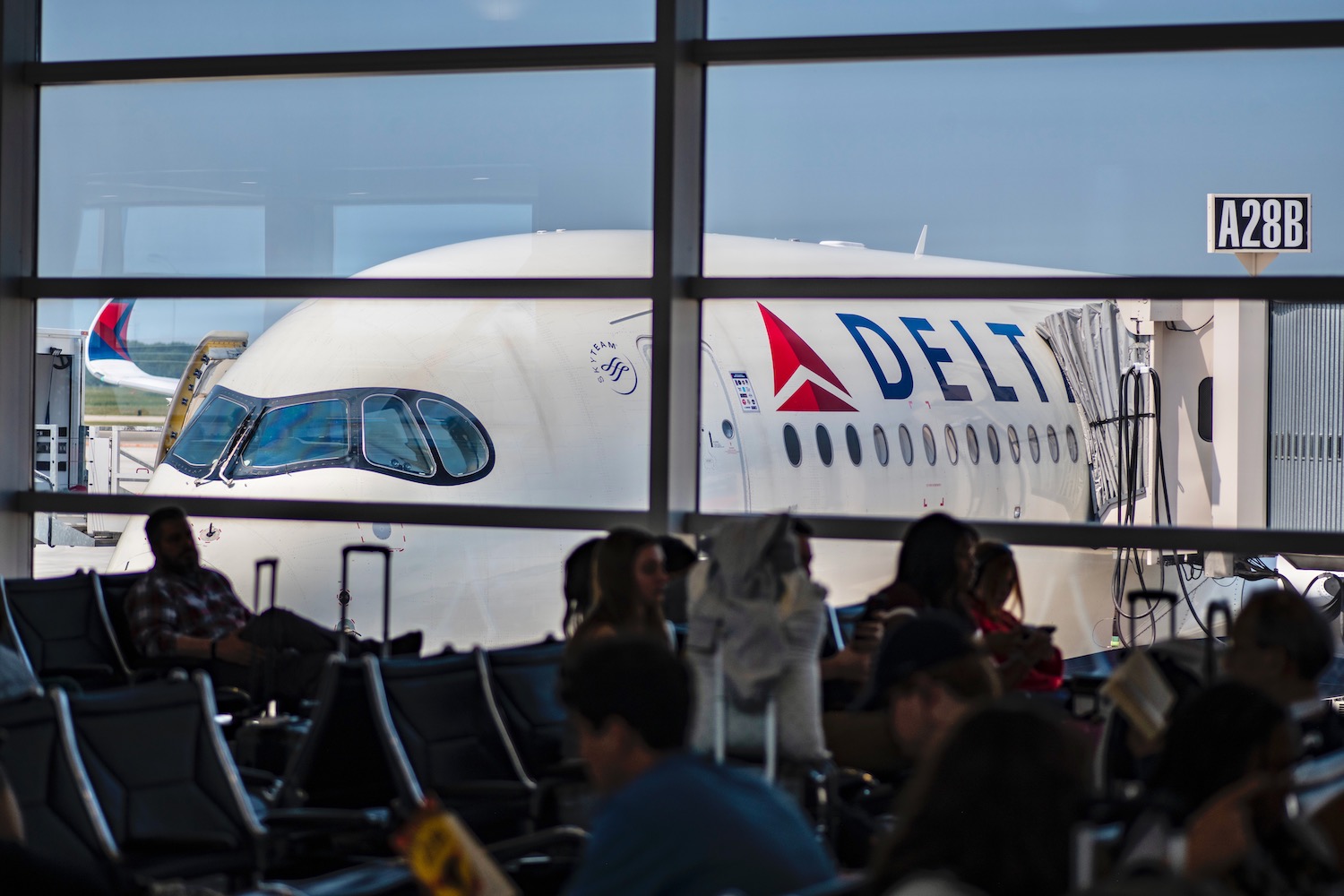




Other FAQ About Delta, American and United
What is the best airline in the US?
No US airline is great or even good. However, I’d probably say that one of the mid-tier US airlines (such as Alaska/Hawaiian, Southwest or JetBlue) is the objective “best.” The title definitely doesn’t belong to United or American or Delta, even if they have the largest fleets and route maps.
Why is Delta better than American?
Delta has better marketing than American, and has invested a great deal of time and money as branding itself as “premium.” However, the onboard and on-the-ground experience of flying both airlines is pretty similar, especially compared to superior foreign airlines like KLM or Cathay Pacific.
Is it better to fly Delta or United?
Delta and United each fancy themselves to be in a competition for the title of “America’s most premium airline.” However, I find both to be lacking when compare to foreign alliance counterparts, such as Korean Air and Air France (for Delta) and ANA or Singapore Airlines (for United). I’d probably give United a slight edge for its massive transpacific network, and Delta for its slightly more elevated onboard experience.
The Bottom Line
American vs Delta vs United—why does it seem like the “Big 3” US airlines are in a never-ending race to the bottom? Now, perhaps I’m being too cynical. I’ve had the occasional excellent flight on each of these carriers, and most of the other trips I’ve taken have been inoffensive and forgetful. The thing is, my bad flights have been terrible. I’m talking flight attendants who were actively hostile (even aggressive) toward passengers, and delays which, far from being caused by acts of god, seemed to be the result of incompetent management and planning. Need personalized help deciding which airlines to fly (or avoid) on your next trip? Consider hiring me as your Travel Coach!